
Quick answer
How to Make a Marriage Biodata: A Simple Guide for Families
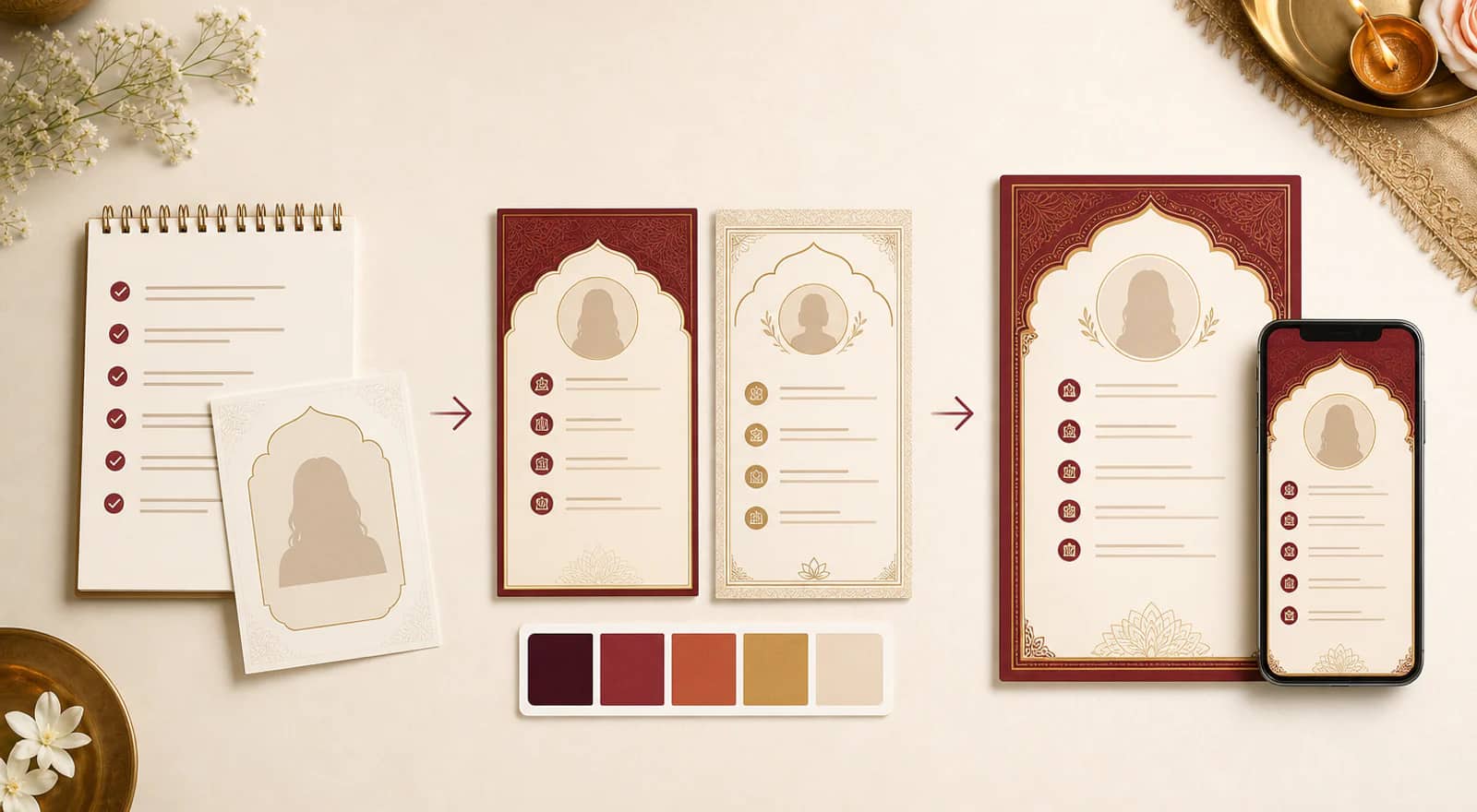
To make a marriage biodata, gather verified personal, education, work, family, and contact details first. Write a short introduction in the person’s own voice, add only relevant community or kundli fields, arrange everything in a clear order, and check the finished page on a phone before sharing it as a PDF.
Start with the conversation you want the page to open
A marriage biodata is usually read before the first call. A parent, aunt, uncle, or trusted relative may see it first, so the page should make the important things easy to understand: who you are, what you do, what your family is like, and what kind of life you hope to build.
Begin with the person, not the design. Once the details are clear, the right format becomes much easier to choose.
Step 1: Gather the details your family genuinely needs
Keep one note open while you collect the information. Confirm the spelling of names, date and place of birth, current city, qualification, occupation, family contact, and the details your family uses for horoscope matching.
Do not add a field simply because you have seen it on another biodata. Include religion, community, language, Rashi, Nakshatra, Gotra, income, or lifestyle details when they help the receiving family understand the introduction.
- Personal details and a recent photograph, if your family includes one.
- Education, occupation, business, work city, and a short career note.
- Parents, siblings, hometown, and a brief family background.
- Community or horoscope details when they are part of your family conversation.
- A family contact and a small, clear note about expectations.
Step 2: Write a short introduction that sounds like you
Three or four lines are enough to give the page a human centre. Mention the work you do, the people or places that matter to you, and one everyday detail that feels true. “I enjoy music” is a label; “I practise classical music on Sunday mornings” gives the reader somewhere to begin.
Parents can help with family details, and the son or daughter can make sure the introduction sounds natural. The final page should carry both kinds of understanding.
A simple introduction can carry three things
- The present
- What you do now and where you live.
- The everyday
- One true interest, habit, or family detail.
- The direction
- The kind of home or partnership you hope to build.
Step 3: Put the sections in the order families naturally read them
A useful order is personal details, education and work, family background, community or horoscope information, expectations, and contact. You can change that order when your family reads the introduction differently. The point is to keep the page easy to follow, not to obey a rigid rule.
- Personal introduction and photograph, when included.
- Education, work, business, or current study.
- Parents, siblings, hometown, and family context.
- Kundli, religion, community, language, or other relevant fields.
- Expectations and the family contact for the next conversation.
Step 4: Choose the file for the next step
Use the editable Word file while the family is still editing. Use PDF when the details are settled and the page is ready to send or print. JPG or PNG is convenient for a quick WhatsApp preview. Keep the editable version with the family and forward one final copy so an older draft does not circulate by mistake.
Step 5: Read it once as a family would
Open the finished biodata on a phone. Check whether the photograph feels natural, whether names and dates are correct, and whether the family contact is clear. Read the page once without editing it. If the important details are difficult to find, the receiving family will feel that difficulty too.
A good marriage biodata does not try to complete the whole conversation. It gives the right family a clear and respectful reason to begin one.
Research trail
- Public step-by-step marriage biodata guidance
- Reddit: discussion about how a biodata moves through families
Our editorial methodology
The Biodata for Marriage Editorial Team checks each guide against the current builder, published templates, and any sources listed in the article. Before changing the review date, we recheck examples for personal information, verify file-format instructions, and test the relevant links.